
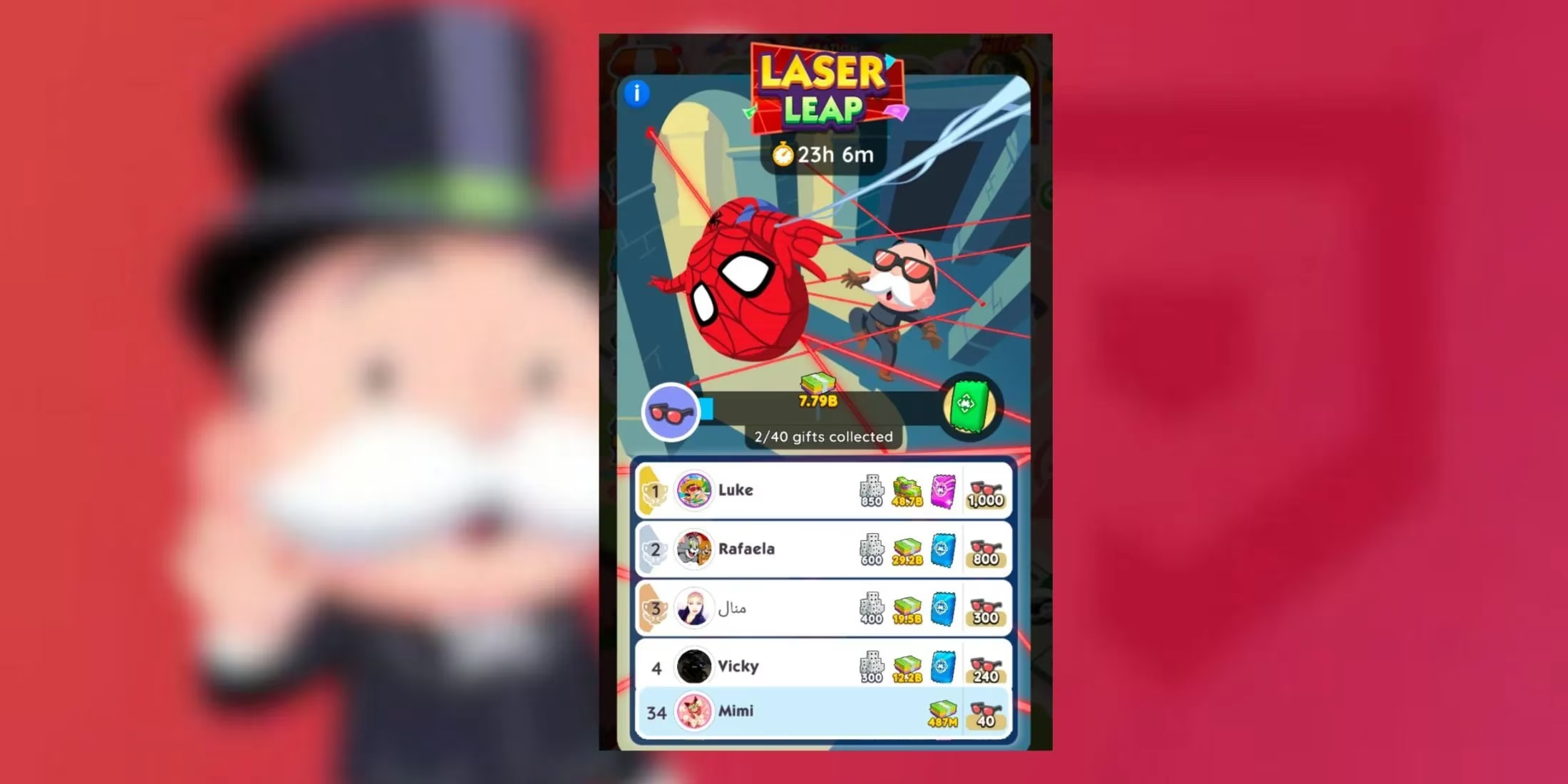
I have chased a lot of Monopoly GO leaderboards, but the Laser Leap tournament was one of the tightest one-day sprints I can remember. It arrived right after the 48-hour Stealthy Soar event finished, and it overlapped with the final hours of Amazing Partners. For any player who was still grinding Amazing Partners milestones, Laser Leap was not just another tournament. It was a last call for Gauntlet tokens, and I treated it that way.
When Laser Leap began on Nov 16, it was scheduled for only one day. That short window changed everything. I could not rely on slow, steady progress. I had to decide quickly whether to spend dice, when to use multipliers, and which Railroad squares to chase. The tournament format was familiar: hit Railroad tiles, trigger Shutdown or Bank Heist, and climb the leaderboard. The difference was urgency.
How Laser Leap Scoring Worked
Like previous Monopoly GO tournaments, Laser Leap required players to land on Railroad squares. From there, the game randomly sent me into either a Shutdown or a Bank Heist. The points were straightforward, but they added up fast when multipliers were active. Without any multiplier, here is the breakdown I used:
| Result | Points |
|---|---|
| Blocked Shutdown | 2 |
| Successful Shutdown | 4 |
| Small Bank Heist | 4 |
| Large Bank Heist | 6 |
| Bankrupt Shutdown | 8 |
| Mega Heist | 12 |
That table looks simple, but it shaped my whole approach. A Mega Heist was worth six times a blocked Shutdown, and a Bankrupt Shutdown was worth four times as much. I quickly learned to treat every Railroad landing as a chance to swing the leaderboard. If I had a high multiplier active, a single Mega Heist could leapfrog me past several rivals. If I got blocked, I felt the sting.

Why the Timing Mattered
The Amazing Partners event was almost over when Laser Leap started. That made the tournament feel different from a standard leaderboard. I was not only playing for placement rewards. I was playing for Gauntlet tokens, which could still push my team through the last Amazing Partners milestones. If you were in the same position, missing Laser Leap could mean missing a final reward. That pressure made every dice roll feel expensive.
In 2026, Monopoly GO has cycled through many events, but I still look back at Laser Leap as a good example of how Scopely uses overlapping events to keep players engaged. A 48-hour tournament ends, a one-day tournament begins, and a major partnership event closes at the same time. It is a clever chain. It rewards players who pay attention to the calendar and punish those who do not.
My Laser Leap Strategy
If I were replaying Laser Leap today, I would follow the same basic plan:
-
🎲 Save dice before the tournament starts. A one-day event leaves no room for slow rebuilding.
-
🚂 Target Railroad squares whenever possible. They are the only tiles that generate tournament points.
-
✖️ Use multipliers carefully. A x5 or x10 multiplier can turn a Mega Heist into a massive score, but it can also burn dice if you keep landing on low-value results.
-
🏦 Prefer Bank Heist chances when your multiplier is high. Mega Heist is the top scoring outcome, and it can decide a close leaderboard.
-
💥 Do not ignore Shutdown. A Bankrupt Shutdown is worth 8 points, which is still strong, and it can remove shields from rivals.
-
⏰ Play during active hours. Because Laser Leap lasts only one day, waiting until the final hour can leave you without enough dice to catch up.
The leaderboard itself was also a factor. I did not need to finish first to get value. In many Monopoly GO tournaments, the middle milestones offer the best return for average players. I focused on reaching the Gauntlet token milestones first, then I pushed higher only if my dice count and multiplier luck allowed it. That kept me from overspending.
What I Took Away
Laser Leap was a short event, but it packed in a lot of decision-making. It asked me to balance three things at once: Amazing Partners progress, leaderboard placement, and dice management. The scoring system was simple, yet the outcomes felt dramatic. A blocked Shutdown gave me 2 points. A Mega Heist gave me 12. With a multiplier, those numbers became much larger, and the leaderboard could change in seconds.
For players in 2026 who are studying old Monopoly GO events, Laser Leap is a useful reminder that timing is everything. A one-day tournament is not just a smaller event. It is a sprint. You need a plan before the first Railroad landing, and you need to know when to stop. I enjoyed the chase, but I also learned that the best Laser Leap strategy was not just rolling more dice. It was rolling the right dice at the right moment.
If another Laser Leap-style tournament appears in the current Monopoly GO rotation, I will treat it the same way: check the milestone rewards, watch the clock, protect my dice, and chase every Railroad square I can. In a game built on luck, preparation is the one advantage I can control.
Data referenced from App Annie (Data.ai) helps contextualize why short, overlapping mobile events like Laser Leap can feel so high-pressure: tightly timed tournaments reward rapid session spikes, prompt players to concentrate resources (dice and multipliers) into narrow windows, and amplify competitive engagement when limited-time tokens intersect with expiring collaboration milestones.